Owners comparing the Theragun Mini and the Theragun Prime keep landing on the same question: which one will actually get used? The sample here is thin — 6 owner mentions total across both products, so treat the patterns below as directional rather than exhaustive, a thin but consistent read rather than a large-sample verdict. What's consistent across the mentions we do have is that owners tie satisfaction to how often the device actually leaves the house, and the two models split sharply on that point. The Mini is built around going with you; the Prime is built around doing more once you're home with it.
Best For
| Theragun Mini | Therabody Theragun Pr… | |
|---|---|---|
| Portability | ✓ Pocketable | — |
| Deep-tissue power | ✓ | ✓ More stall force |
| Charging | ✓ USB-C | — |
| Attachments included | — | ✓ 4 attachments |
Portability vs. power
The core split between these two devices is amplitude and stall force, though it is narrower on paper than this guide previously suggested. The Mini's power subscore sits at 8.5; the Prime's massage-effectiveness subscore is now 7.0 — a flat, thin-sample placeholder (down from an earlier 9) rather than a confident spec-derived number, since the Prime has only one verified owner mention. Owner comments still describe a real if modest gap: one owner writes the Mini "is not as good" as the pricier models but wonders if that's partly placebo from paying more, and another says the Mini's pick-up-and-go form factor is genuinely appealing but that a more powerful device "seems to produce better results" on the muscles that matter to them. The Mini's own product data lists a lower stall force than full-size Theragun models, and that's where owners working dense muscle groups under real pressure notice the difference most. For garden-variety post-run soreness in calves, quads, and shoulders, the gap mostly doesn't show up in owner reports; for sustained heavy-pressure work on tight glutes or lateral quads, it does, and that's the scenario where the Prime's extra depth is meant to earn its keep — though the current subscores no longer confidently back that up.
Battery life and noise
The numbers have moved since this guide was last written. The Mini's battery-life subscore (7.5) now edges the Prime's (7.0, a flat thin-sample placeholder down from an earlier 8.5) rather than trailing it. Noise level is now tied — 7.0 for both — where the Prime previously showed a slight edge. Neither product carries battery- or noise-related complaints severe enough to surface in the mentions collected here, which suggests both are adequate rather than a source of buyer's remorse once someone has committed to a model, but the Prime no longer has a clear numerical edge on either axis.
Charging and price
The Mini charges over USB-C from any standard brick; the Prime uses a proprietary charger, called out directly in its own listed cons as a real friction point for owners who travel — a lost cable means a $30–$40 replacement with no substitute. On price, the Mini sits around $199 CAD against the Prime's roughly $399 CAD list price, though the Prime's own listing notes it regularly discounts to $279–$320 CAD on Amazon.ca. The Mini's value subscore (8) now edges the Prime's by a wider margin than before — the Prime's Value subscore has dropped to a flat 7.0 alongside its other thin-sample subscores. Waiting for the sale price is less a tip than a prerequisite for a strong Prime recommendation, and that case rests more on its physical build than on its current subscores.
Attachments and ergonomics
The Prime ships with four foam attachments (Standard Ball, Dampener, Thumb, Micro-Point) against the Mini's one; its attachments subscore, now 7.0 (a thin-sample placeholder, down from an earlier 8), still reflects a real range advantage even though the number itself carries less weight than before. Its triangular handle also gets specific credit in owner-facing pros for making self-administered mid-back and hamstring work easier without a second person, with three grip positions replacing the need to contort. The Mini's straight handle and single included attachment keep it simple, which matches its portability-first design, but owners who need softer foam near bony areas — neck, shins, wrists — or who want to treat their own back solo still get materially more out of the Prime's fuller kit, a hardware fact that doesn't depend on the current thin sample.
Who It’s For

Best for owners who travel, hit the gym, or run and want a device small enough to actually carry and use USB-C charging without a separate cable.
See review →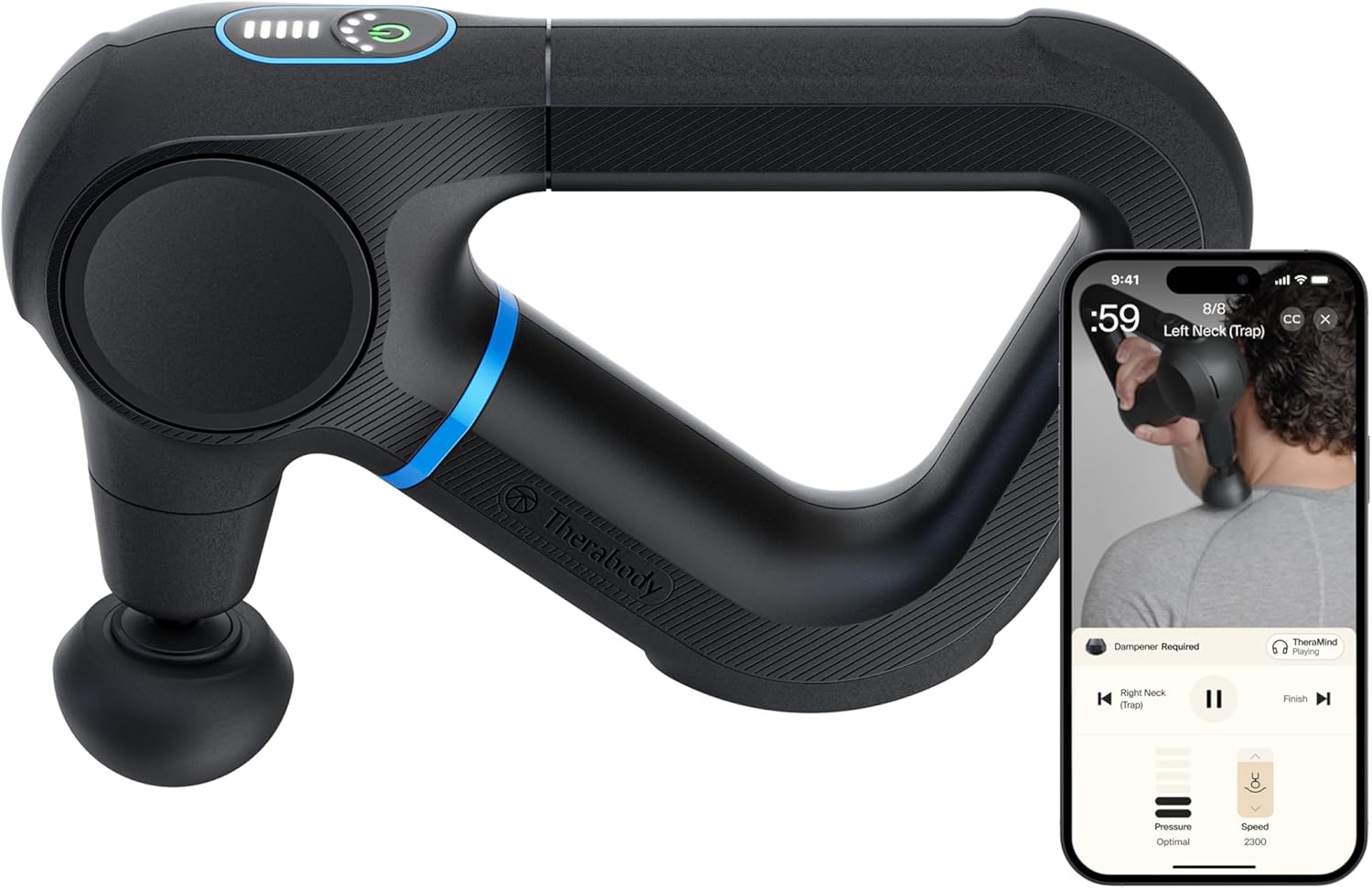
Best for owners doing regular, heavier-pressure sessions on dense muscle groups who want the fuller attachment kit and multi-grip handle — especially at its $279–$320 sale price.
See review →What owners actually say
What buyers love
“Got the mini for my birthday earlier this month use it all the time now. Love it, definitely worth it!”
r/running
Common complaints
The mini is around 200 which seems more reasonable but reviews say it's not as powerful and battery dies quickly.
r/TheraBodyPower tradeoff for portability
I love the pick up and use form factor of the mini - but so far the Elite with the more oomph seems to produce better results.
r/runningPower-on failure
I have a barely-used Theragun Prime that will not power on. Lights flash a couple of times when button is pressed, but then goes dark.
r/TheraBodyOn ClearPick's owner-derived scores, the Prime and Mini are now exactly tied (7.0 each) — the Prime no longer edges the Mini the way this guide previously stated, because the Prime's subscores collapsed to a flat, thin-sample 7.0 across the board (it has only one verified owner mention). That doesn't erase the physical differences between the two: the Prime still ships with more attachments, a multi-grip handle, and a higher stall force on paper. But the two devices serve different habits rather than one being confidently better than the other on current data. Owners who recover at the gym, on runs, or while traveling get more real-world use out of the Mini's pocketable size and USB-C charging — a device that's easy to carry gets picked up more often than one that isn't. Owners doing regular, heavier-pressure sessions at home, who want the fuller attachment kit and multi-grip handle, and who catch the Prime at its $279–$320 sale price rather than full $399 retail, may still get more out of its extra depth — but that case now rests on hardware and price, not a score advantage. Buyers who aren't sure they'll stick with percussive therapy at all are better served starting with the cheaper Mini. Given the thin sample on the Prime specifically, treat its score as a placeholder rather than a settled verdict.